Introduction
Cardiopulmonary resuscitation, or CPR, is a life-saving technique that's vital in emergencies when a person's heart has actually stopped defeating or they've quit firstaidpro.com.au breathing. In such dire scenarios, recognizing exactly how to do CPR properly can make the difference in between life and death. One vital element of providing effective CPR is understanding the significance of taking turns on compressions This article will certainly dig deep right into the art of efficient CPR, discovering topics from standard vs advanced life assistance to public defibrillator usage.
Taking Activates Compressions: The Art of Efficient CPR
When it comes to providing mouth-to-mouth resuscitation, taking turns on compressions is vital for keeping high-quality chest compressions. It assists prevent exhaustion among rescuers and makes sure that the casualty obtains consistent and reliable compressions. The recommended price for chest compressions is in between 100 to 120 per min, with a depth of at least 2 inches for grownups. Rescuers should change every 2 mins or faster if they really feel fatigued.
Understanding Fundamental vs Advanced Life Support
Before diving into the specifics of mouth-to-mouth resuscitation techniques, it's essential to set apart in between standard and sophisticated life support (BLS vs ALS).
Basic Life Support (BLS)
BLS normally includes non-invasive procedures carried out by nonprofessionals or very first responders learnt mouth-to-mouth resuscitation. It focuses on:
- Checking Responsiveness: Evaluating whether the individual is conscious. Identifying No Breathing: Observing if the person is not taking a breath or taking a breath abnormally. Administering Breast Compressions: Performing high-quality upper body compressions and rescue breaths if trained.
Advanced Life Support (ALS)
ALS includes more advanced medical interventions normally carried out by healthcare experts, such as paramedics or medical professionals. It consists of:
- Use of sophisticated airway monitoring techniques Administration of medications Monitoring essential signs
Both BLS and ALS are essential components of emergency situation action systems yet offer various roles within individual care.
The Importance of Examining Responsiveness
In emergency situations, fast decision-making can be lifesaving. Checking responsiveness ought to constantly be the primary step:
Shout and Shake: Carefully shake the casualty and shout loudly if they respond. Assess Feedback: If there's no response, proceed to look for breathing.Being able to acknowledge responsiveness can establish whether immediate activity is necessary.
Identifying No Breathing
Identifying no breathing is important in verifying heart attack. After checking responsiveness:
- Look for breast rise. Listen for breath sounds. Feel for air against your cheek.
If there's no typical breath within 10 secs, call for help right away and begin breast compressions.
Maintaining Composure During CPR
Administering CPR can be stressful; thus preserving calmness is vital:
- Focus on your task available; your actions might save a life. Take deep breaths before starting if you really feel anxious.
Remember, panic can cause errors-- clear thinking results in better outcomes.
Public Defibrillator Use: A Lifesaver
Another essential element in heart attack situations is the use of Automated External Defibrillators (AEDs):
Locate an AED: Several public locations now have AEDs accessible. Follow Instructions: AEDs provide voice triggers; follow them carefully. Attach Cushions Properly: Guarantee pads are put appropriately on bare skin-- one pad on the top right chest and one on the reduced left side.Using an AED increases survival possibilities considerably when made use of promptly along with CPR.
The Duty of BLS Qualification in Efficient CPR
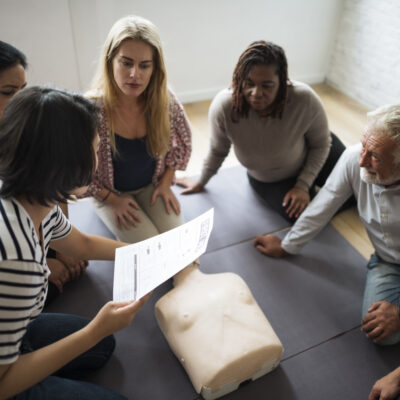
Obtaining a BLS qualification equips people with important abilities:
- Understanding exactly how to check responsiveness Identifying no breathing Administering reliable breast compressions
Courses usually cover both adult and pediatric scenarios, making it very useful for caregivers, educators, and work environment safety and security teams.

The Mechanics Behind Taking Activates Compressions
Taking turns on compressions includes systematic sychronisation among rescuers:
Timing Your Change: Purpose to switch every two minutes or after 5 cycles of 30 compressions and 2 breaths. Communicate Clearly: Usage phrases like "Switch over!" so every person knows when to transition without missing out on a beat. Stay Reliable: Maintain shifts smooth-- don't let hands leave the chest during switches.
This approach avoids fatigue and keeps premium compression requirements needed for efficient resuscitation efforts.
Lower Compression Depth: Why It Matters
Maintaining proper compression deepness is essential in ensuring blood flow during cardiac arrest:
Adult Deepness: At the very least 2 inches (5 cm) Child Deepness: Concerning 1/3 the deepness of their chest Infant Depth: About 1 1/2 inches (4 centimeters)Lower compression depths fail to create sufficient blood circulation-- ensuring correct deepness straight associates with survival rates.
Slow Compression Price-- A Misconception?
Some may think that reducing compressions boosts efficiency; however:

- Studies reveal that maintaining a quick pace between 100 -120 per min returns better outcomes.
If you're not familiar with this price, consider making use of tunes like "Surviving" as an acoustic guide!
FAQs Concerning Efficient mouth-to-mouth resuscitation Techniques
Q1: What ought to I do initially when I witness somebody collapse?
A1: Examine responsiveness by shouting at them and shaking them delicately; if unresponsive, call emergency services immediately.
Q2: Just how commonly need to I take turns doing compressions?
A2: Preferably switch every 2 minutes or earlier if you really feel fatigued; clear interaction ensures smooth transitions.
Q3: Can anybody execute CPR?
A3: Yes! Anybody trained in basic life support can administer mouth-to-mouth resuscitation successfully till professional help arrives.
Q4: What role does an AED play in cardiac emergencies?
A4: An AED assesses heart rhythm and provides shocks if needed-- when integrated with mouth-to-mouth resuscitation, it greatly raises survival chances!
Q5: Do I require special training to use an AED?
A5: No! Many AEDs are created for ease of use with visual/audio prompts leading you with each step-- training enhances confidence yet isn't mandatory!
Q6: For how long need to I proceed CPR?
A6: Continue up until doctor arrive or until you are as well tired to proceed securely-- every 2nd counts!
Conclusion
Mastering the art of efficient cardiopulmonary resuscitation needs practice, understanding regarding fundamental vs advanced life assistance principles, comprehending just how to examine responsiveness, recognizing no breathing circumstances quickly, keeping calmness throughout stressful situations, using public defibrillator usage when readily available-- this thorough understanding culminates in effective treatment methods during emergencies.
By focusing on essential aspects like taking turns on compressions while making certain adherence to health center codes and methods-- even during minutes filled with anxiety-- a solid foundation constructs confidence that equates into improved victim outcomes!
So equip yourself with BLS qualification today because your readiness may just save somebody's life tomorrow!